
Search Eau Claire County Divorce Records
Eau Claire County Divorce Records can start with the courthouse, then move to the Register of Deeds or the state vital records office when you need a certificate instead of the case file. The clerk of court keeps the court side of the record, while WCCA gives you the first public check. If the case is active, the county office can point you to the right form or copy request. If the case is older, the search may take a little more work, but the county still gives you a clear way in once you know the case details.
Eau Claire County Overview
Eau Claire County Divorce Records Office
The Eau Claire County Clerk of Circuit Court is the main office for the court file. The office manages records, collects court-ordered financial obligations, oversees the jury system, and keeps the public access path moving. The county page also says court staff cannot provide legal advice and do not accept filings by email. That matters because a divorce record search is one task, while a live filing or motion is another.
The office uses a phone directory that lets you choose a line for divorce, child custody and placement, restraining orders, civil or small claims, and juror questions. That makes the courthouse easier to use when you already know the kind of help you need. Eau Claire County also uses a security scanning station on the second floor, so you should plan enough time to finish your business before the office closes at 4:30 p.m.
This Eau Claire County Divorce Records image comes from the official clerk of courts page at Eau Claire County Clerk of Circuit Court.
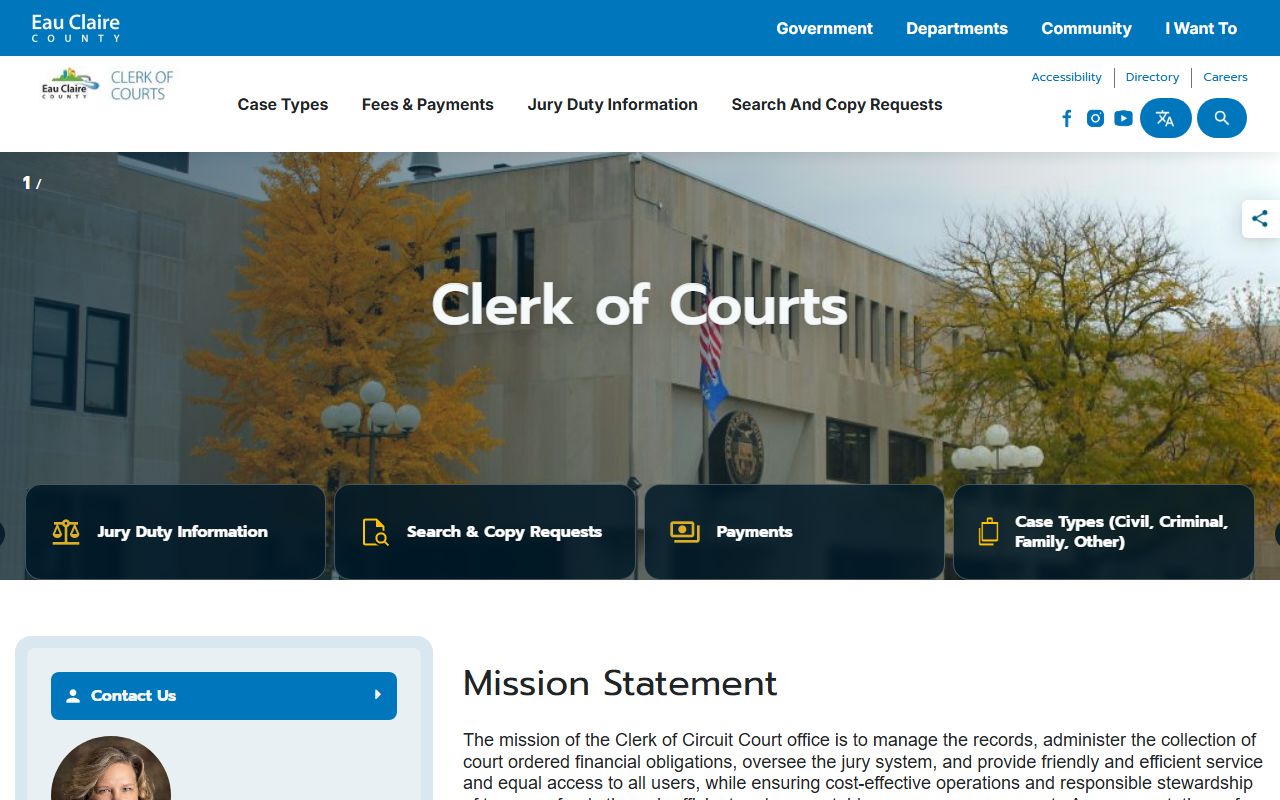
Use the clerk when you need the court file, a status check, or help finding the right department line for a family case.
The county office also provides some forms and written instructions to help court users. That is useful when you are not trying to change the legal result, just find the paperwork and the path. If you need deeper help, the county directs people to an attorney rather than asking staff to guess at the right legal move. Note: The clerk keeps the court record, but the office will not replace a lawyer or pick your strategy for you.
How to Search Eau Claire County Divorce Records
The best public search is Wisconsin Circuit Court Access. Eau Claire County research says cases from 1992 onward can be looked up on WCCA. You can search by party name, case number, case classification, or filing date range. The portal can show the case number, the filing date, party names, attorneys, the assigned judge, scheduled hearings, case status, and court activity dates. That is often enough to tell you whether the divorce case is in Eau Claire County and whether it is still open.
If the case is older than 1992, the county says you need to contact the Clerk of Courts office and pay a $5 search fee. That is a useful line to remember because it keeps you from assuming every case can be found the same way. WCCA is fast and free for the public side of the case. The clerk is the better next step when the file is old, the names are common, or the public portal is too thin to help.
Keep these details ready before you search:
- Full name of one spouse
- Approximate filing year
- Case number, if you know it
- Family/divorce case type or date range
The state court system explains the portal through Wisconsin Circuit Court Access CCAP. That page is a good companion because it explains the statewide system behind the public search and reminds you that the full case file still lives with the county office. If you only need a quick public check, WCCA is usually enough to get you moving.
This Eau Claire County Divorce Records image comes from the official WCCA and CCAP page at Wisconsin Circuit Court Access and CCAP.
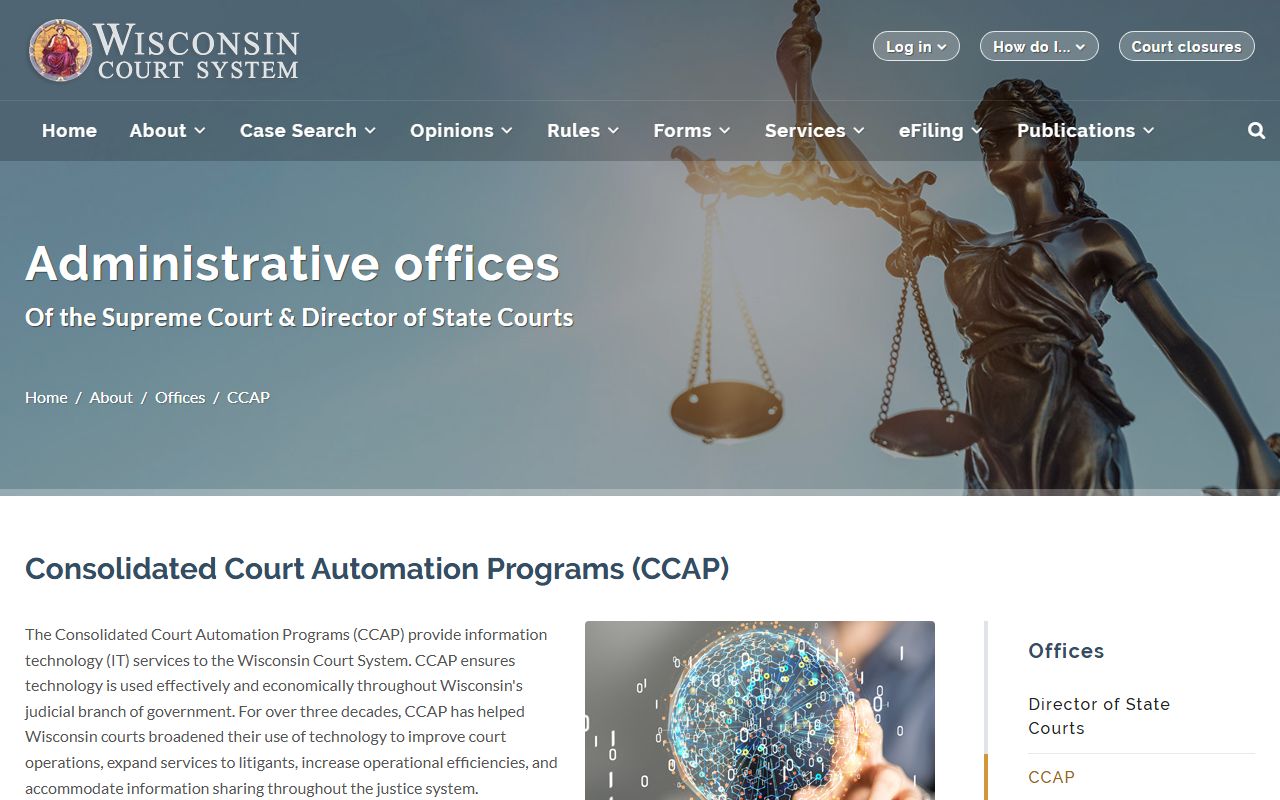
Use the portal to narrow the case, then switch to the clerk when you need the actual file or a certified copy.
Eau Claire County Divorce Records Copies
Eau Claire County copy fees are spelled out in the clerk FAQ. Regular copies of court records cost $1.25 per page. Certified copies cost $5 per case number. If you do not give the case number, the county charges a $5 research fee. That fee structure rewards a clean search, because the more complete your request is, the less work the clerk has to do to find the file.
For the certificate side, the county register of deeds and the Wisconsin Department of Health Services handle the vital-record path. The state office keeps divorce records from October 1907 to the present and explains the difference between a Certificate of Divorce and the court decree. The county register of deeds is the local office for certificate help, while the clerk keeps the judgment and the full court file. That split is the key to keeping the request on track.
The state pages are here: Wisconsin DHS Vital Records, Wisconsin Vital Records, and Wisconsin Vital Records Applications. Those pages explain the mail process, the online partner route, and the difference between the certificate and the judgment. If you need the record for remarriage, a name change, or another proof-of-event purpose, the certificate route is usually the right fit.
The Eau Claire County law library page also lists the Register of Deeds and family court contacts, which is useful when you want one official place to start. The county keeps the record trail local, but it also points you back to the state office when the request belongs there.
Eau Claire County Divorce Records Filing Steps
If you are starting a new divorce in Eau Claire County, the county page separates the process into joint filings and filings made by one spouse. It also gives instructions for temporary orders if the parties do not agree on custody, placement, support, or related issues. That is the practical part of the file. The first forms create the record, and the later forms keep the case moving until the final hearing.
The county also requires personal service of the summons and petition within 90 days of filing. Proof of service must be filed with the Clerk of Court Office before the case can move forward. If the parties have completed the required paperwork and set a final hearing, one party may waive appearance by filing the county waiver form. Those small local rules matter because a missing service paper can slow a divorce file down even when the case itself is simple.
Wisconsin law still sets the larger frame. Under Wis. Stat. 767.301, the residency rule must be met. Under Wis. Stat. 767.315, the marriage must be irretrievably broken. Under Wis. Stat. 767.335, the court still waits 120 days after service before final judgment. The county rules and state rules work together, so the file only moves cleanly when both are followed.
For the forms themselves, the county tells filers to use the Wisconsin Courts website for state forms. The statewide self-help page at Wisconsin Court System Divorce Help and the forms page at Circuit Court Forms are the best starting points before you file. They help you build the packet before you ask the clerk to open or process the case.
Eau Claire County Divorce Records Help
The Eau Claire County law library page is a strong local help map. It lists the Clerk of Court, Register of Deeds, Family Court Commissioner, Register in Probate, Child Support Agency, District Attorney, Sheriff, and several legal aid groups. That matters because divorce records often lead to other family-law issues. A record request may be the first step, but it is rarely the last one.
County staff can provide forms, written instructions, and common court procedures, but they cannot provide legal advice or tell you which legal path to take. That boundary is repeated in the county research. If you need deeper help, the State Bar referral service and Legal Action of Wisconsin are named in the county resource page. Those services can help when a case turns from a record search into a live legal problem.
This Eau Claire County Divorce Records image comes from the county law library page at Eau Claire County Legal Resources.
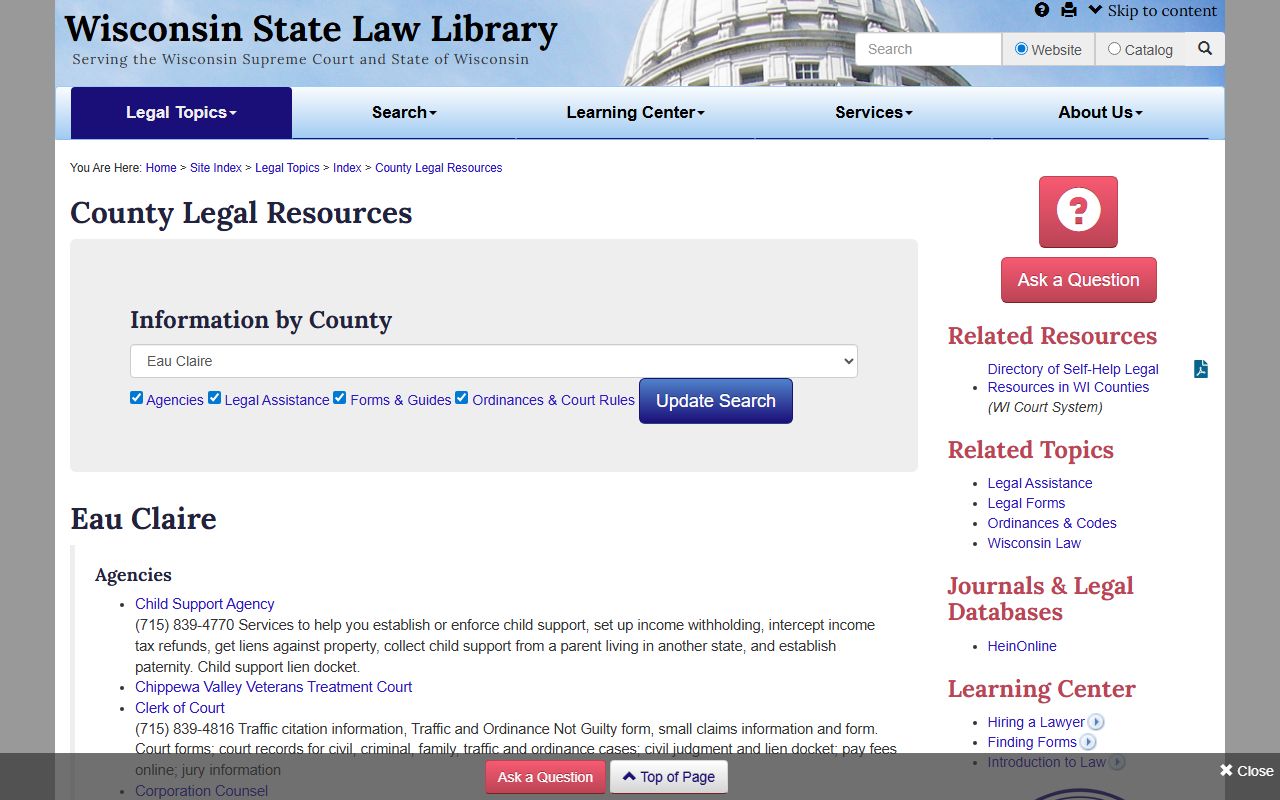
Use that page when you want the local office list, the family forms path, and the help contacts in one official place.
The Wisconsin Courts self-help divorce page is also worth a look when you want a plain guide before you file or request copies. Note: A WCCA search, a clerk file, and a certificate request each answer a different question, so matching the request to the office saves time and money.